
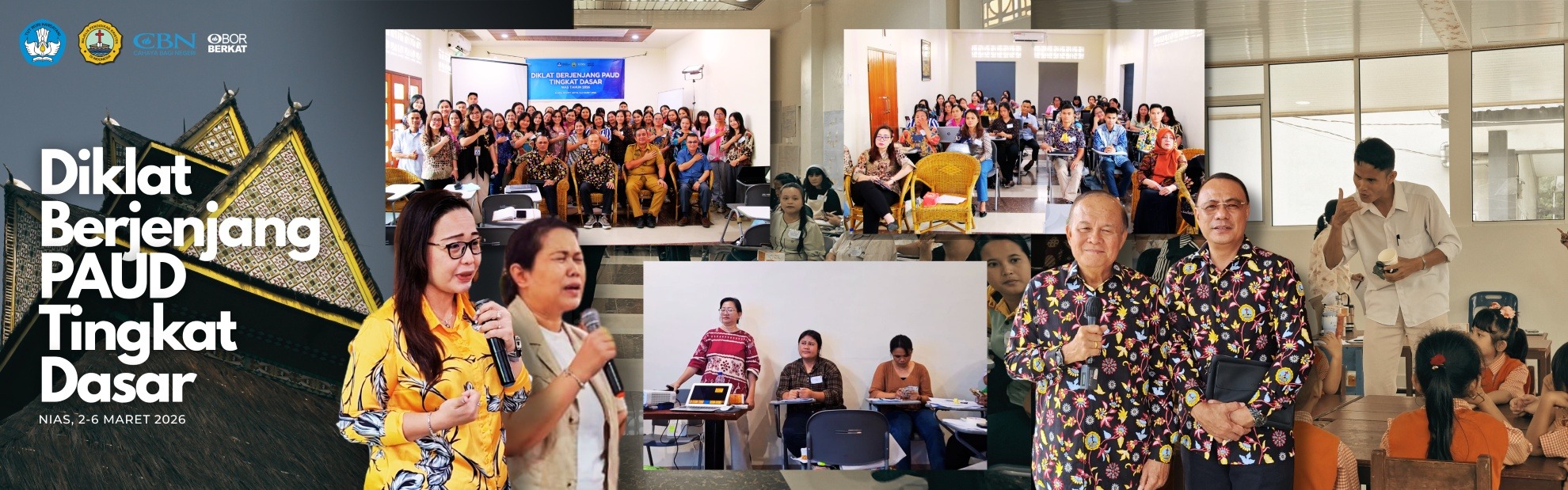
NIAS, March 2–6, 2026 – Many Early Childhood Education (PAUD) educators in various remote areas have been teaching for a long time, even for years. However, a significant number of them still do not possess a Bachelor's degree (S1) in PAUD.
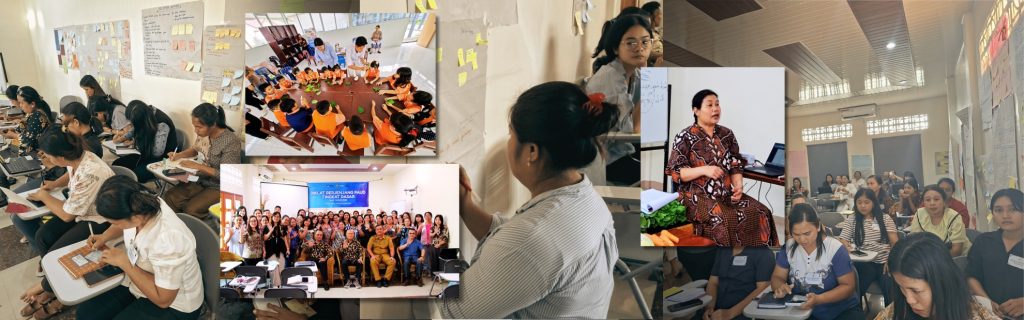
As part of the effort to address this need, the Christian Education Council in Indonesia (MPK Indonesia) organized a Basic Level Tiered Training in Fodo, Nias, from March 2 to 6, 2026. This activity was carried out through a collaboration between MPK Indonesia, the Ministry of Basic and Secondary Education of the Republic of Indonesia (Kemendikdasmen), Cahaya Bagi Negeri, and Obor Berkat Indonesia.
Through this training, teachers are equipped to strengthen their competencies in building a foundation for quality early childhood education. This effort is also in line with MPK Indonesia's vision to accelerate school transformation, starting with teachers who continuously learn and develop themselves.
Interestingly, the benefits of this activity do not stop at the new knowledge and skills acquired during the training. The Basic Level Tiered Training also opens opportunities for improving academic qualifications through the Recognition of Prior Learning (RPL) mechanism.
Through this program, the teaching experience and training that teachers have undergone can be recognized as academic credits. Thus, the certificates obtained from this training can be converted into Semester Credit Units (SKS) when educators pursue a Bachelor's degree (S1) in PAUD through the RPL track.
For many participants, this opportunity represents a new hope for continuing their education. Most of them have been teaching in PAUD for a long time with diverse educational backgrounds, ranging from high school graduates to bachelor's degree holders from other fields, such as theology.
One participant expressed their gratitude for the opportunity.
“We have been teaching for a long time, but many of us do not yet have an S1 in PAUD. With this training and the information about RPL, we see hope to be able to continue our studies more easily,” they said.
With this opportunity, the teachers' learning process does not stop in the training room but can become a concrete step toward improving academic qualifications while strengthening the quality of early childhood education.
By increasing the competence and qualifications of educators, this activity is expected to be part of a collective effort to accelerate school transformation, beginning with the strengthening of teacher capacity as the primary foundation of education.